A Small Fort With A Big Story
Before Elkton was Elkton, this land sat at the crossroads of trade, travel, and survival. Fort Umpqua once stood near the confluence of the Umpqua River, serving as a key stopping point for trappers, traders, and settlers moving through the region. While the original fort is long gone, the stories tied to this place still shape the community today.
Fort Umpqua was established in the 1830s by the Hudson’s Bay Company, a powerful British trading organization focused on the fur trade.
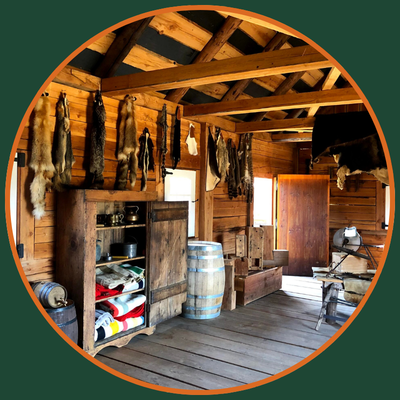
The fort was strategically placed to manage trade routes, collect pelts, and maintain relationships — sometimes tense ones — with local Indigenous tribes. This was not a military fort in the traditional sense. Instead, it functioned more like a trading post, warehouse, and hub of daily life on the frontier.
Life at Fort Umpqua was rugged and unpredictable. Workers lived in small buildings inside the fort walls, spending their days trading, repairing supplies, and navigating the challenges of isolation. Food was grown, gathered, or traded locally, and communication with the outside world could take months. Daily life depended heavily on cooperation—between workers, nearby tribes, and travelers passing through the area.

Here’s a surprising twist: this region very nearly became British territory. Because the Hudson’s Bay Company played such a major role in early settlement and trade, British influence was strong in the Umpqua Valley. For a time, control of the Oregon Territory was undecided between Britain and the United States. Had history shifted just slightly, Elkton and much of Oregon might have flown a very different flag.
Long before Fort Umpqua existed, this land was home to Indigenous peoples who knew the river, forests, and seasons intimately. Trade at the fort relied heavily on relationships with local tribes, though those relationships were shaped by unequal power and growing conflict as settlers arrived. Understanding Fort Umpqua also means recognizing the deep history that existed here long before the fort’s walls were built.
Flooding, isolation, and shifting trade routes eventually led to Fort Umpqua’s closure. As settlers moved inland and transportation improved, the fort’s role faded. Over time, buildings were dismantled or lost to the elements, leaving history beneath the soil rather than standing structures.
Fort Umpqua represents a turning point — a moment when global trade, colonial ambition, and local history collided right here in the Umpqua Valley. While the fort itself no longer stands, its influence remains woven into Elkton’s story and identity. Visiting this site is less about seeing buildings and more about standing where history unfolded.
Take A Virtual Tour
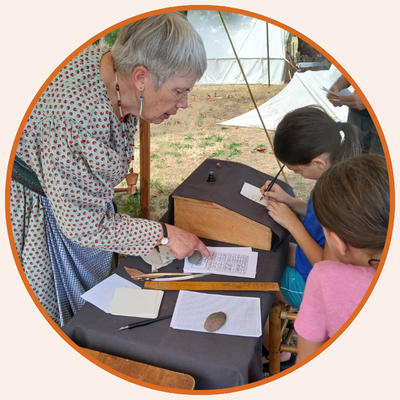
Take a look at these videos about Fort Umpqua that were produced by one of our Youth Employment Program graduates, Grace Lyons.
The first video talks about when it was originally built and items that were traded at the Fort back in the 1800’s.
The second video talks about the layout of the Fort and folks that lived and worked there back then.
Make Your Own History
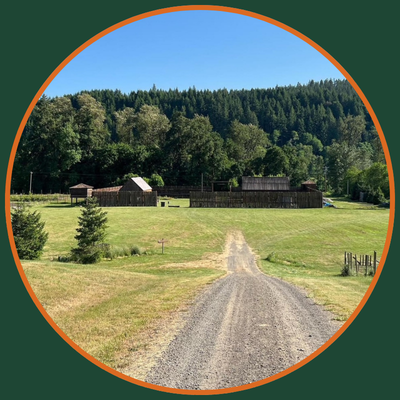
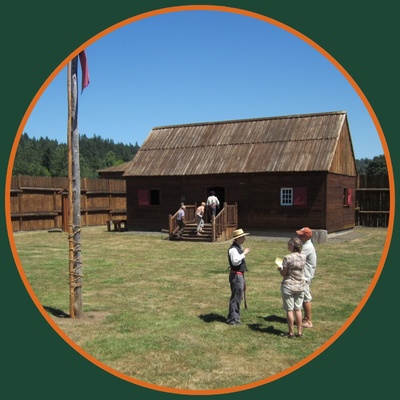
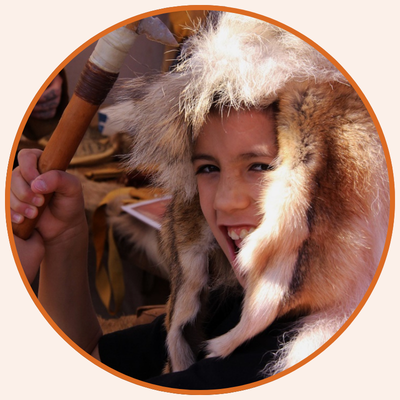
Today, Fort Umpqua is a host site for those who are interested in exploring the area’s history from the mid-1800s and having a hands-on type of experience. The complex was built by volunteers and includes 12″ high stockade walls, a trade building, the men’s quarters (barracks) and a blacksmith’s shed that were all based on the original fort design.
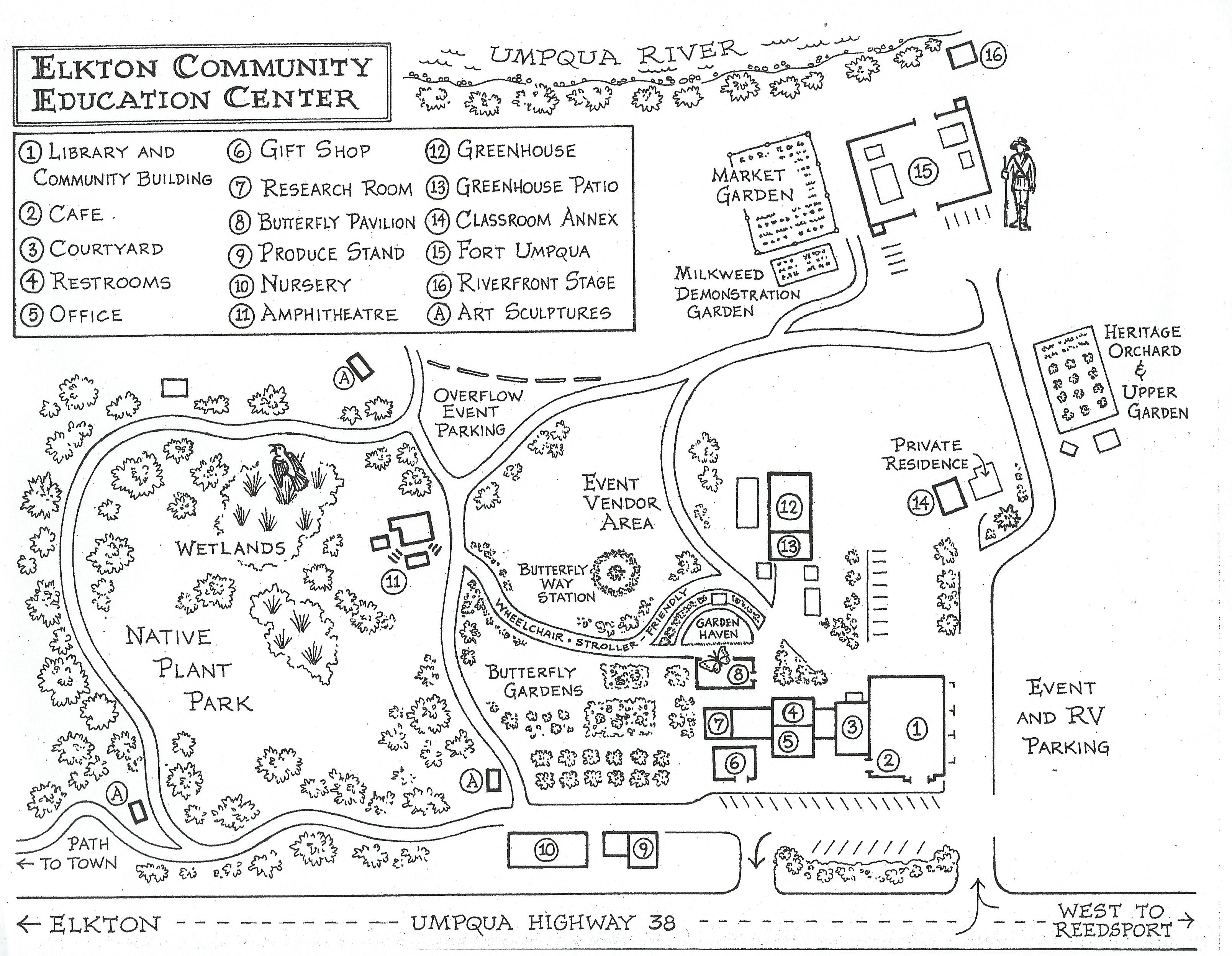
Fort Umpqua is located alongside the Umpqua River and can be accessed by a walking path or driveway. Site maps are available in the Main Office, or you can click here to see the different paths you can take.
Follow these links to learn more about:
Fort Vancouver (Vancouver, WA): A 19th-century fur trading post that was the headquarters of the Hudson’s Bay Company’s Columbia Department.
Fort Nisqually (Tacoma, WA): An important fur trading and farming post of the Hudson’s Bay Company in the Puget Sound area, part of the Hudson’s Bay Company’s Columbia Department.
Douglas County Museum (Roseburg, OR): An interpretive center where you can learn Douglas County’s role in Oregon.
American Mountain Man Society: An association of individuals dedicated to the preservation of the traditions and ways of the mountain man.
Oregon Heritage Fair (Eugene, OR): A lively celebration of traditional crafts, msic and cultural heritage from across Oregon.
Bohemia Mining Days (Cottage Grove, OR): An annual festival honoring the region’s gold mining history with parades, activities and family-friendly fun.
Fort Umpqua Days (Elkton, OR): Elkton’s annual celebration of local history featuring community events, demonstrations and activities at Fort Umpqua.
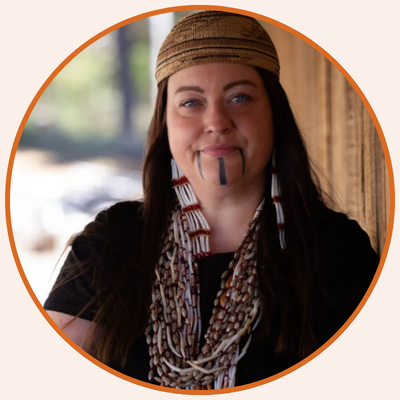
This site is located within the traditional homelands of the Komemma Kalapuya. People from the tribes of the Yoncalla, Kalapuya, Umpqua, Lower Umpqua, Coos, Tututni and Siuslaw all spent time here, traveled and traded here.
The Hudson’s Bay Company had a policy of not antagonizing the indigeneous people, but their presence still played a role in the transformation of the culture and land of the Umpqua Valley.
We are learning more about the relationship between the people who worked at Fort Umpqua and the people who lived on the land when they arrived, and look forward to sharing that.
Partners who are supporting Fort Umpqua this year: